
Hicham Awad Selects: Ghassan Salhab’s Phantom Beirut
The stranger is not the wanderer who comes today and leaves tomorrow, but rather the person who comes today and stays tomorrow. He is, so to speak, the potential wanderer: although he has not moved on, he has not quite overcome the freedom of coming and going. —Georg Simmel, “The Stranger”, 1908
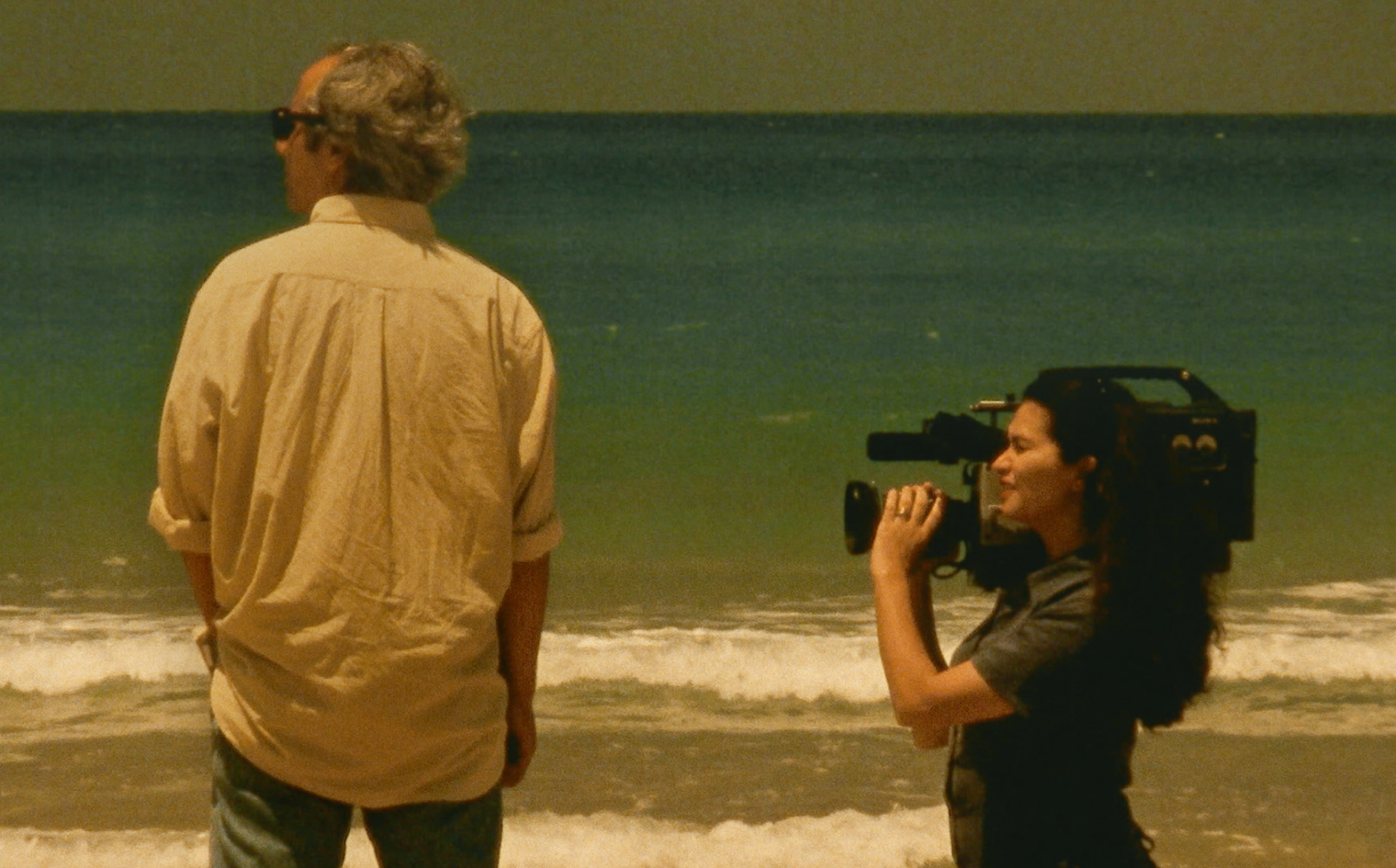
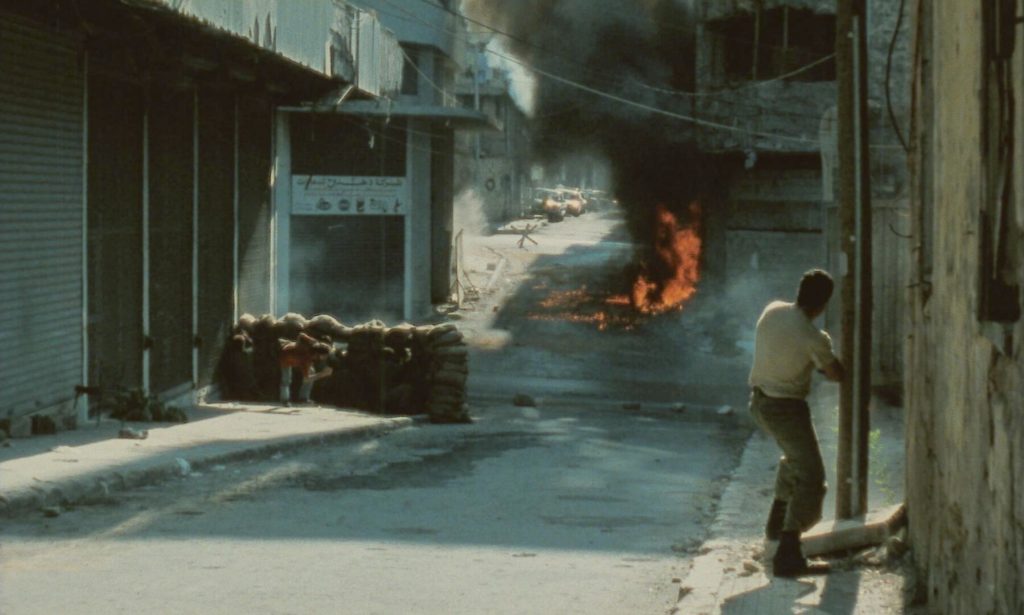
Ghassan Salhab’s first feature film, Phantom Beirut, ought to be placed in a lineage of cinema of revenants, strangers, and unexpected or unwelcome guests that includes films like Pier Paolo Pasolini’s Teorema and Charles Burnett’s To Sleep with Anger. What distinguishes the figures that haunt these films is their impudence. They refuse to play the role of the reticent or humble guest. Instead, they reconfigure or even mount an assault on the traditions and protocols of hospitality. Not only do they overstay their welcome, but they threaten to upend everything and everyone they come across. The man at the center of Phantom Beirut, Khalil, returns to the war-torn city at the end of the 80s, ten years after staging his own death and leaving the country for Dakar, filmmaker Ghassan Salhab’s own birthplace. His posthumous return is confusing to everyone: an incomprehensible escape that is regarded by the people he left behind not just as a personal injury but also as a form of treason, an unfathomable abandonment of cause and nation.
Aouni Kawas plays the ghost, a belligerent revenant. Instead of making amends, he is accusatory. In one scene, standing outside his sister’s apartment door, he refuses to announce himself when asked to. Maybe stating his name will bring him back too firmly and permanently into the land of the living. A silhouette behind the frosted glass door, he is silent, like a specter out of Dreyer’s Vampyr, and when he is finally let into the apartment, his joke is razor-sharp, a cynical attack on one of the country’s hollow mythologies: “Where did this country’s sense of hospitality go?” he asks her.
Salhab’s first film, from the purview of his later work, is disarmingly, uncharacteristically chatty. In it, Salhab, a revenant himself after living in Senegal and Paris, looks for ways to speak in and to the chatterbox city, here depicted as desperately scavenging for words, names, and explanations. Even Khalil, who makes his way through the city largely invisibly and quietly at first, becomes logorrheic as the film goes by. Try to count the number of times characters say ‘Beirut’, as though the rest of the country does not exist. For Khalil’s comrades or former comrades, the Palestinian cause splinters into a paranoid fear of petty thievery in a panic around money gone missing from the group’s organizing unit.
There is a lot to be said, and also not much at all, in place of things that can no longer be done, like the remnants of railroad tracks the characters come across and which used to but can no longer lead to Palestine. These forks in the road grow more important for Salhab in his later work, which becomes both laconic and decentralized, growing weary of both words and Beirut itself, like the protagonist of the film The Mountain, who fakes leaving the country to isolate himself in a hotel in the north, or the vampiric doctor of The Last Man who roams the infinite nocturnal expanses of underground parking garages. These locations multiply in Salhab’s film, and the South, or Southern Lebanon, Salhab’s home, becomes more central, the repressed negative of the self-mythologizing capital.
Hicham Awad is a writer, editor, and translator living in New York. He is on the editorial board of Narrow Margin, is the Managing Editor of e-flux Books, and teaches at The Cooper Union.
Leave a Reply