

Whitney Strub Selects: Emanations of Robert Kramer
When I first took interest in Robert Kramer, as a grad student in Los Angeles around 2003, it was nearly impossible to see his films. Later, I caught a substantial 2009 retrospective at Anthology Film Archives in New York City, commemorating the tenth anniversary of his tragically early death at sixty, but even then, Kramer remained shrouded in mystery and obscurity, a shadowy revolutionary filmmaker seemingly written out of history.
That was what prompted me to begin the research that ultimately led to Films That Explode Like Grenades: Robert Kramer and the Search for a Radical Cinema, just published by the University of Chicago Press. Even today, Kramer’s work can be elusive—for a few films, I had to watch them on a computer in his archives, located in a monastery in northern France still bearing WWII bomb scars. OVID has been a godsend for making Kramer available, with Ice (1969), Milestones (1975), and Route One/USA (1989) forming an astonishingly expansive set of national snapshots in three different decades, tracking the climax and disappearance of Kramer’s Sixties revolutionary dreams. He moved to France in 1979, and his longtime cinematographer Richard Copans’s Looking for Robert (2025) offers a loving, critical portrait of their fraught but productive collaboration.
For my selections, I picked five works with organic connections to Kramer—his scattered emanations, of which there are many more buried on OVID and elsewhere, since to sift through 60s radical film is to rarely be more than one step removed from Kramer’s legacy.

1. Time of the Locust (Peter Gessner, 1966)
Gessner is another of those leftist filmmakers who deserve more attention. He co-directed Last Summer Won’t Happen (1968), a survey of antiwar activism on the Lower East Side (also on OVID), and Finally Got the News (1970), a crucial portrait of radical Black labor organizing in Detroit. Later, he joined the Cine Manifest collective in San Francisco, and went on to become a private investigator and novelist.
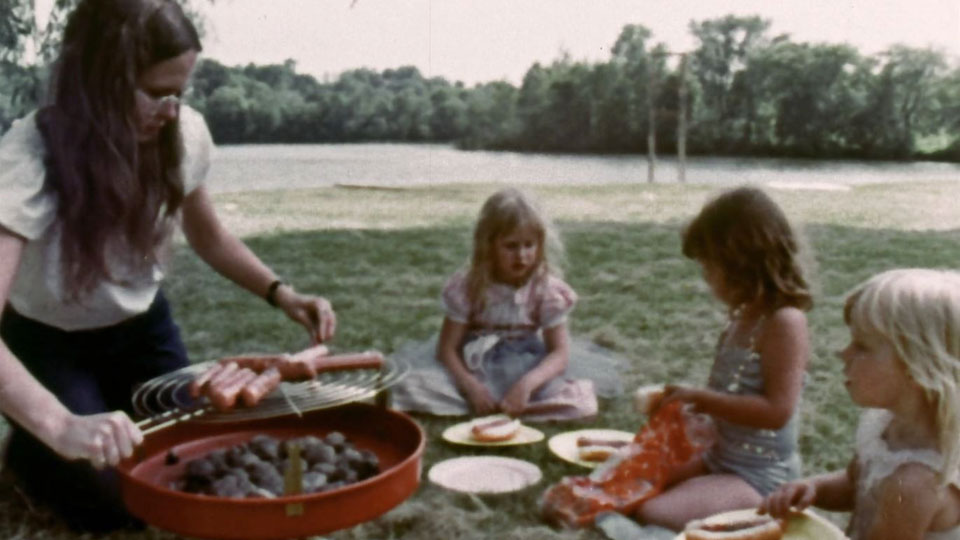
2. Chris and Bernie (Bonnie Friedman & Deborah Shaffer, 1974)
Deborah Shaffer is a key figure in the feminist and leftist documentary filmmaking of the past half-century, dating back to her turn-of-the-Seventies work in Newsreel, where she first met Robert Kramer. They remained friends through his death, and she witnessed both the selfish artist and the generous family man at different points. Shaffer won a Best Short Documentary Oscar for her 1985 film Witness to War: Dr. Charlie Clements, and probably her most famous work is The Wobblies (1979, available on OVID), an incredible historical documentation of the then-aging anarchist labor radicals of the early 20th century. But perhaps my personal fave is Chris and Bernie, co-directed with Bonnie Friedman (herself an unsung pioneer of feminist documentary). It chronicles the bonds between two women as they navigate single motherhood, offering a half-hour of endless warmth, naturalism, and empathy. I love this film, which very much stands on its own—even as I secretly think you could smoothly edit it into Milestones without any seams showing for a sort of post-Newsreel mid-Seventies supercut.
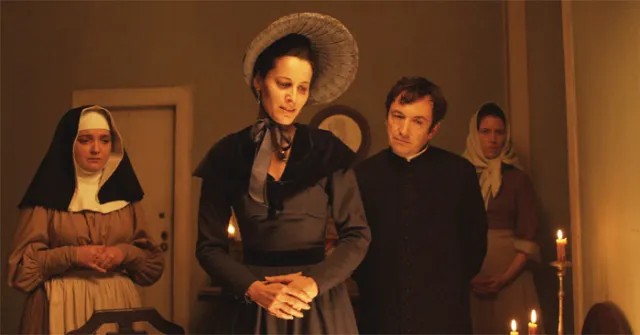
3. Mysteries of Lisbon (Raúl Ruiz, 2011)
Ruiz shared certain strong affinities with Kramer, as leftists living in Parisian exile, Ruiz having fled the Pinochet dictatorship in Chile after working with the democratically elected socialist president Salvador Allende, deposed and driven to death in a 1973 US-sponsored coup. Like Kramer, he interrogated the left from oblique angles rather than making simplistic agitprop. Ruiz’s sensibility, however, tended toward more playfully deconstructive affect, closer to Peter Greenaway’s archness than the resolutely unironic Kramer. Still, they grew close through the festival circuit in the late 1970s, Ruiz and his wife/editor Valeria Sarmiento played key roles in facilitating Kramer’s move to France in 1979, and they very nearly collaborated on an essayistic documentary about the Paris Metro in the early 1980s, getting as far as provisional seed funding from the Ministry of Culture before the project fizzled due to both filmmakers maintaining an absurdly prolific pace in that era. Still, they remained friendly through Kramer’s death, and while he was not around to see Mysteries of Lisbon, it is in many ways the summation of late-period Ruiz, which swerved from his early-1980s semiotic play to a late-90s sumptuousness, never greater than this film’s four-plus luxurious hours of conspiracies and distorted memories.
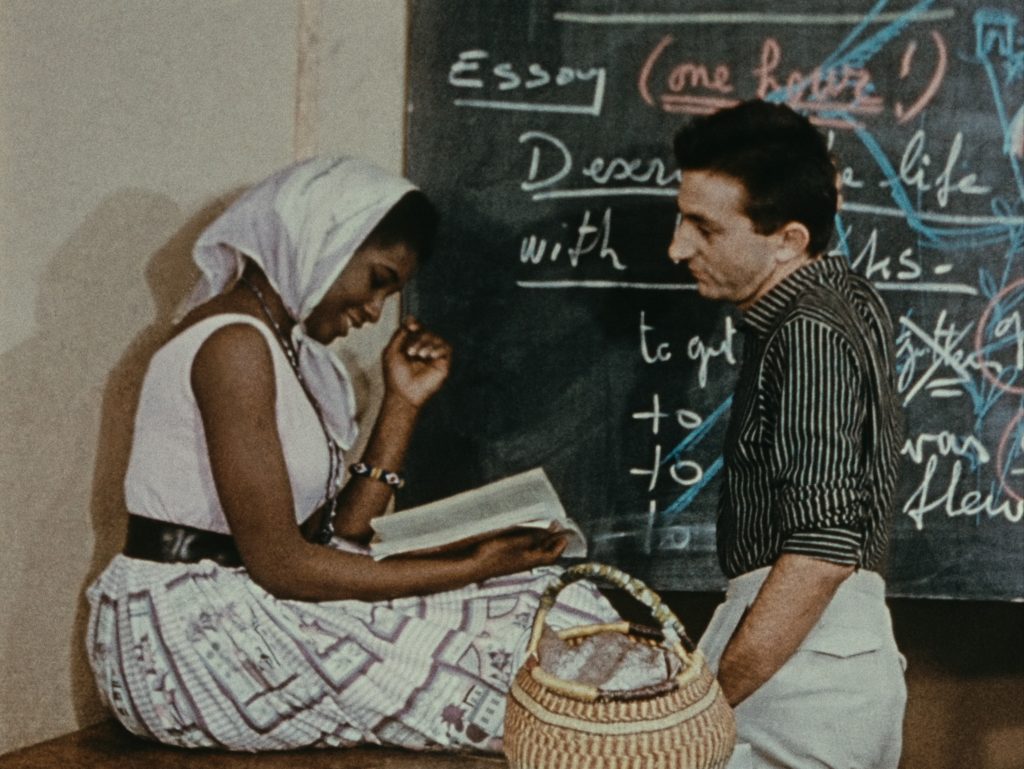
4. The Human Pyramid (Jean Rouch, 1961)
Jean Rouch is a vexing figure, a French pioneer of ethnographic film in Africa who never fully transcended the colonial gaze, who could work in solidarity but also behave in predatory and abusive ways. His work deserves to be seen but also demands critical scrutiny, and The Human Pyramid, made in collaboration with his Ivory Coast students, is Rouch at his best—a playful, reflexive, meta-film that tackles race relations from multiple angles. Rouch’s Kramer connection is slight but amusing. When documentarian Dominique Dubosc brought Rouch on to collaborate for an anthology film commemorating the centennial of the Lumière brothers’ 1895 cinematic breakthrough “actualities” by recreating modern versions, they invited Kramer to contribute. He had what he considered a perfect framework: the wealthy Lumières had filmed their servants, and he would shoot his, which now consisted of a fax machine, a television, and other technological devices. When Rouch saw these one-minute shorts, he was unimpressed. “That’s shit,” Dubosc recalled him shouting, “that’s just shit!” Thus ended the project.
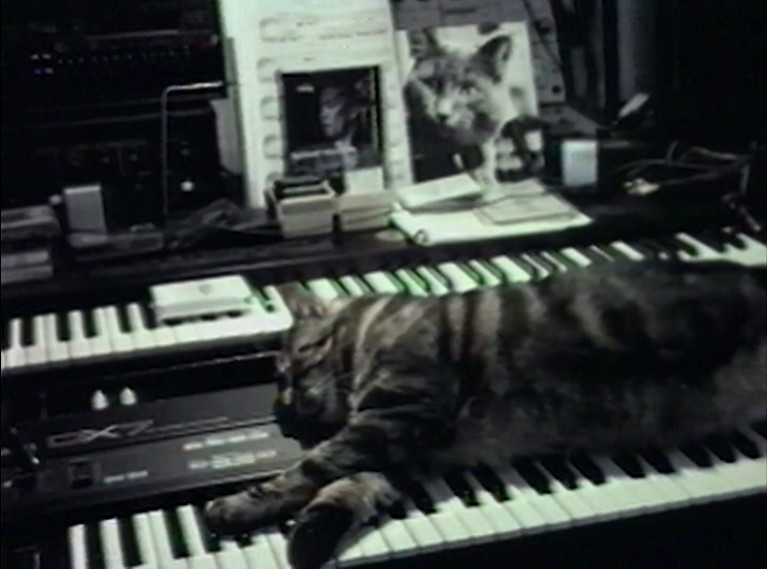
5. Cat Listening to Music (Chris Marker, 1994)
Chris Marker was the reason I first subscribed to OVID, several years ago. A foundational figure in French left and anticolonial film, he was a good friend of Kramer’s—indeed, their affinities ran so deep that their last names are anagrams! At one point, producer Thierry Garrel wanted a Marker by Kramer episode for his long-running Cinéma, de notre temps series, but the retiring Marker declined. You can hear Kramer narrating Marker films on OVID—a bit at the end of Grin without a Cat (1992), and Prime Time in the Camps (1993). But as the onetime co-editor of a tumblr devoted to cats in radical cinema, which took its tagline from Marker (“a cat is never on the side of power”), it is my duty to select this elegiac three-minute masterpiece of Marker’s iconic feline friend Guillaume-en-Egypte, indeed, listening to some music, in what appears to be a state of profound contemplation but might just be typical cat torpor. Robert Kramer, by the way, was not a cat guy, but his wife Erika recounted that he once went on a photo spree across Paris shooting street cats for a birthday present collage for his friend. One of my favorite discoveries in Kramer’s papers, which I found on the final afternoon of my last research visit, was an envelope dated June 1987, labeled “Chris Cat Walk.” The photos inside didn’t make it into my book, but it was the perfect slice of ephemera and a delight to hold in my hands and flip through, thinking of two titans of radical cinema and the goofy little bonds that connected them.

Whitney Strub is associate professor of history at Rutgers University–Newark. He is the author of Perversion for Profit: The Politics of Pornography and the Rise of the New Right (2011), co-editor of ReFocus: The Films of Roberta Findlay (2023), and editor of Queer Newark: Stories of Resistance, Love, and Community (2024), among other books.
Whitney’s new book, Films That Explode Like Grenades: Robert Kramer and the Search for a Radical Cinema, is out this month from University of Chicago Press.
Leave a Reply