

Narrow Margin Selects
We invited the team at Narrow Margin to curate their own selection of films from OVID’s vast collection, and they found gems even we forgot we had!
Narrow Margin’s quarterly print and digital magazine explores obscure corners of film history. Its first issue is dedicated to the work of Luc Moullet and Vittorio Cottafavi; its second features the complete roster of French production company Diagonale; and its third (out this April), attends to the films of Larry Cohen and Rita Azevedo Gomes. Since August 2025, the magazine has programmed and hosted screenings at the ICA in London, Anthology Film Archives in New York, Paradise Theater in Toronto, and LUCA School of Arts in Brussels, among other venues.
This collection of films, accompanied by capsules written by the magazine’s editors, offers a panoramic view of the editorial board’s tastes. Featuring works by Luchino Visconti, Anne-Marie Miéville and Jean-Luc Godard, Kiyoshi Kurosawa, Roger Corman, and Heiny Srour, among other filmmakers, the collection and the accompanying texts reveal a web of shared preoccupations.
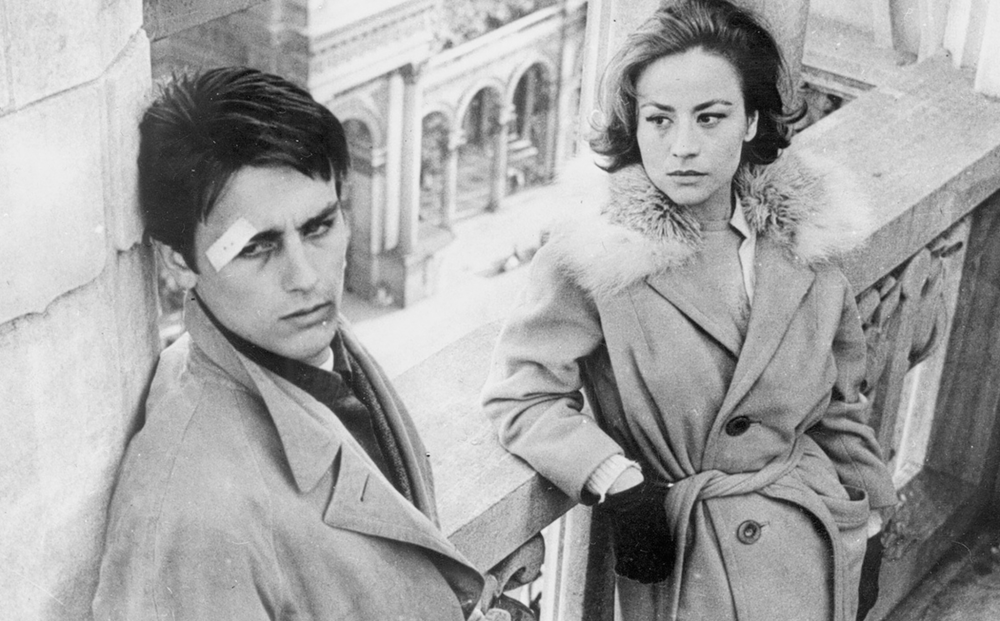
1. Tâm Minh Phạm — Rocco and His Brothers (Rocco e i suoi fratelli) — Luchino Visconti — 1960
If the fact is that no unhappy family is alike, how can this film — which chronicles the intimate disintegration of a peasant family following their relocation from Lucania to Milan in the 1950s — make possible our comprehension of so many? A great number of expressive forms, from the most marginal to the most established, spanning diverse arts (music, theater, painting, literature, sculpture, architecture, dance) and explicative modes available to reason (myth, religion, economics, political philosophy, psychology, geography, linguistics), find here their irreducible justification in the actors’ convulsive and monumental bodies, in the sharply described sets within which human gestures exact irreversible rhythms, in a narrative construct so motivic and juxtapositional that sequences reformulate one another like variations of a theme, panels of a polyptych, acts of an opera. This film, which wagers so much on the universality of its procedures, is also one mauled by the peculiar inconstancies that befell the Italian production (last-minute changes, dubbing in post, brutish censors) at a time when all cinema was beginning to reckon with the independence of its own devices from what they convey. The last shot observes a solitary, Chaplinesque walk away from the camera, allowing neither hope for the future nor despair at the past, only the sense that soon cinema must undertake another attempt to catch up with history.
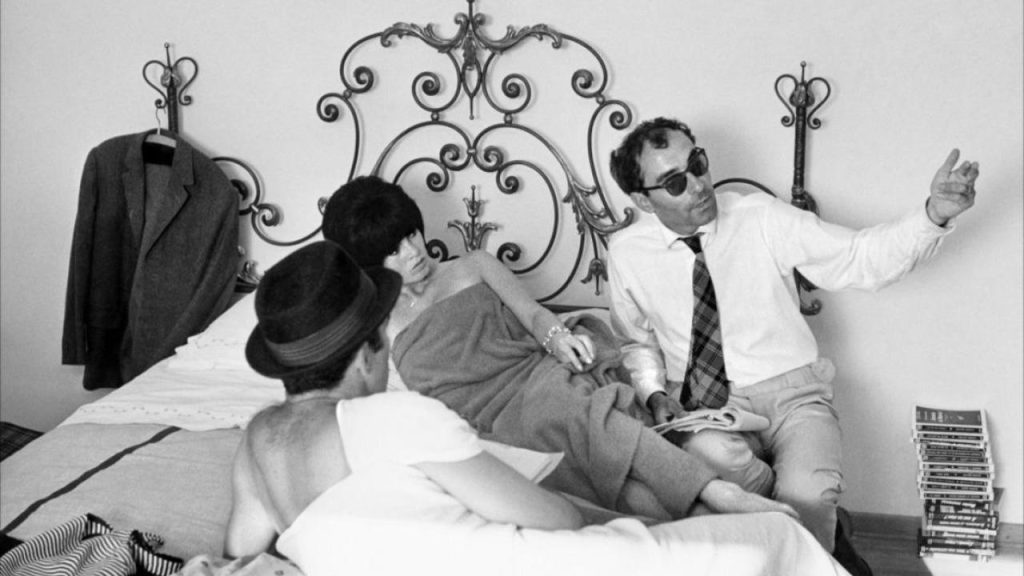
2. Levi Butler — 2 x 50 Years of French Cinema (Deux fois cinquante ans de cinéma français) — Anne-Marie Miéville and Jean-Luc Godard — 1995
It’s not perfunctory, but it is routine. Miéville–Godard fulfilling a British Film Institute assignment using all of Godard’s Histoire(s) du Cinéma tricks. What easily could have just been a familiar story about the disintegration of cinema turns out to be another great utilization of Michel Piccoli as an actor. What first looks like another montage-essay gradually reveals itself as an intimate, interior drama. The directors catch authentic moments unaware by playing dumb; they are ‘just’ simple shots of Piccoli mimicking himself. Yet what emerges is true confusion, true despair, a director revealing themself through another.
This film is small. It was always bound to be marginal. But it is not minor. By this point in his career, Godard had managed to redefine the boundaries of a filmography and how to realize a life through cinema. Works like 2 x 50 are evidence that Godard succeeded in inventing new forms for himself, forms that accomplish what everyone said cinema was incapable of doing; they depict the inner world of thought, the organization of concepts. In answering the BFI’s call, Godard offers his taped consternation and uncertainty about the medium that defined his life. The film ultimately explains itself with an apt line from Jean Cocteau: ‘Mirrors would do well to reflect a little longer before sending back images.’
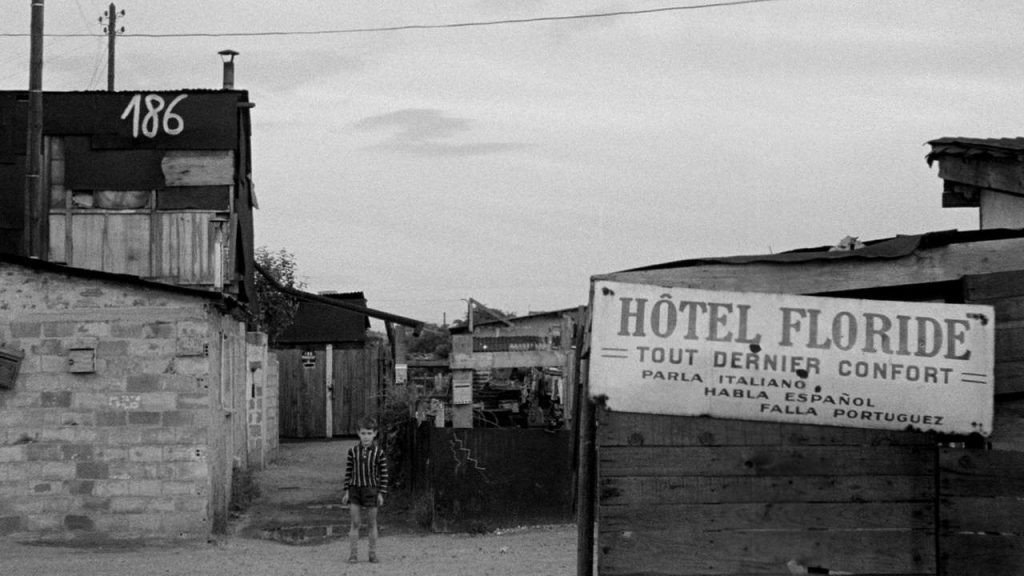
3. Sam Warren Miell — Love Exists (L’Amour existe) — Maurice Pialat — 1961
Love Exists bears one of the most beautiful titles in the history of cinema, alongside History is Made at Night, My Heart is That Eternal Rose and My Love Has Been Burning. Most arrive at this short after watching Pialat’s burning fictions, and are surprised to find an essay film of virtually geometric construction, made in the mould of Marker’s and Resnais’s early work but if anything even more forensic; its Fin could read Q.E.D. But this film burns also, with that same anger that is the pedal tone of Pialat’s entire oeuvre, an anger which, as John Berger wrote of Bruegel, ‘accuses everyone of failing to be different’, an anger at what the bourgeoisie have made of their world and what their world has made of them, ‘a fake culture living in fake buildings’ that limps from childhood (‘What will be their memories?’) to old age (‘But what peace do you get?’). Pialat’s impassive camera surveys the suburbs and slums of Île-de-France before, as in so many of the scenes he would go on to film, simmering resentment boils over into violence so deeply futile that it can only give way to a sadness that holds no consoling secrets, since ‘the only one who could have told of them is silent’. ‘Years and years of cheap hotels and furnished rooms, blows given, blows received’ — with this deflected autobiography, between the fury of a young man and the weariness of one prematurely old, Pialat’s life’s work begins.
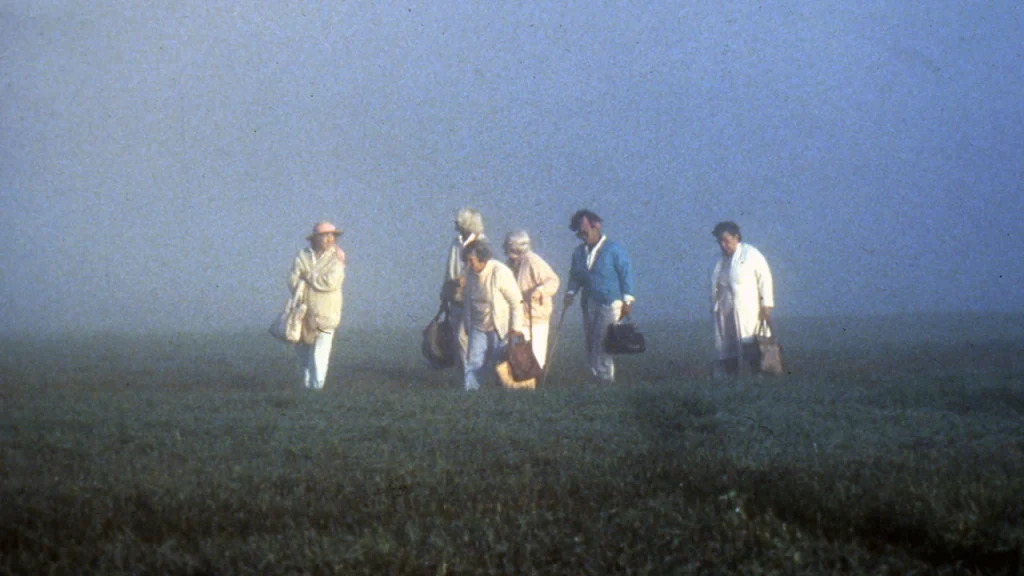
4. Lore Schwartz — Strangers in Good Company — Cynthia Scott — 1990
A major inquiry into cinema’s unique capacity to render the body as necessarily irreducible. Seven elderly women and their bus driver, stranded at an abandoned farmhouse in rural Québec, enact neither survival drama nor sentimental pageant. What begins hurried by needs for food and shelter slows as Cynthia Scott allows her characters, and the unprofessional actors who play them, space to share facts of their lives. After each of these concentrated interactions, she cuts to images from the actors’ childhood, young adulthood, and middle age. A less curious film would treat each occurrence as resolution — given this new understanding of personhood and psychology, what is there left to learn? Strangers in Good Company refuses the conciliatory abstractions of history as justification for present life. It is precisely after these revelations that the film becomes more attuned to the possibilities of the body, however wrinkled or trembling. These matters of trivia may confront an audience’s preconception for beauty but do not impede the desire to be cuddled, to listen to the cries of birds or laugh at the unpredictable movements of a caught fish and rejoice upon the discovery of life beneath the slick rocks on which you stand. This elasticity of pace offers gesture the freedom to propel rhythm — for here is a film that masters, as George Kouvaros would put it, the same ‘challenge addressed by Cassavetes and Pialat: how to ensure that the process of composition and choreography generates a sense of present as open?’.

5. Benjamin Crais — Route One/USA — Robert Kramer — 1989
The title of the film is split. On one side, the territory traversed: Route One, stretching from Fort Kent, Maine to Key West, Florida. On the other, the imagined community of the nation: the United States of America. The film can only encompass some sights and moments in the few states along the route — a memorial to the country’s first black regiment, a wedding between two teenagers, a stop on the Pat Robertson campaign — but they inform us about the history and the health of the nation. The party taking the journey is also divided: a fabulated character before the camera (Doc, incarnated by Paul McIsaac) and the filmmaker speaking from behind it (Robert Kramer, back from Europe). Like that of territory and nation, the distinction is not simply that between documentary and fiction.
Serge Daney titled his essay on Kramer and John Douglas’ 1975 film Milestones ‘The Aquarium’, proposing the fish tank as a figure for that film’s space and site of enunciation: the insular community of anti-war activists, hippies, and dropouts comprising an American counter-society. The questions underlying Route One are how to act and how to film in an America lacking that vantage and prospect of revolutionary transformation — a new situation of immanence. The first is easier: Doc exits the journey to put his medical skills in service of the needy. Kramer and his camera continue down the road until they reach the edge of the territory: a half-built bridge, lapping water, the ocean viewed through glass.
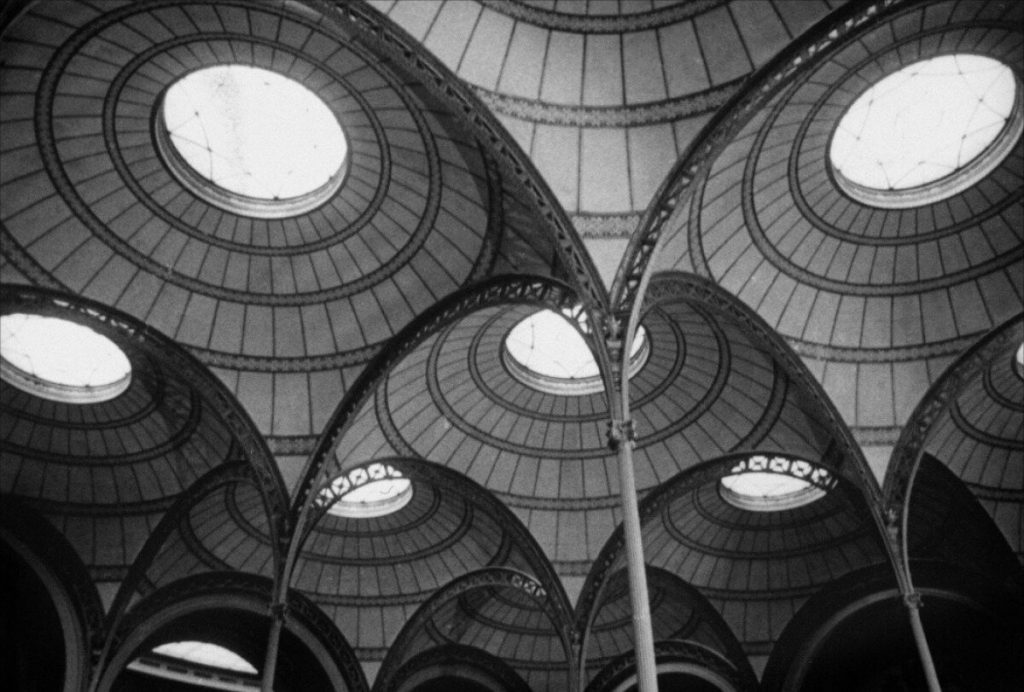
6. Joseph Grimault — All the World’s Memory (Tout la mémoire du monde) — Alain Resnais — 1956
‘The world (which some call the Library)’ [Borges]. Tracking shots are a matter of morality, said Jean-Luc Godard in a roundtable on Resnais’ Hiroshima mon amour; for Resnais’ tracking shots are a matter of memory too. Defined as a ‘cerebral’ filmmaker by Serge Daney, ‘because to watch a Resnais film is to follow the forced march of a nervous influx along the images (as if the images had been neurons)’, the tracking shot follows the influx, as neurons carry — by hand, by cart, by pneumatic tube — memories to their destinataries, through the vaults and the attics of this hippocampus. The neurons? The co-ordination of workers, machinery and organizational processes. The memories? The millions of books, manuscripts, newspapers, encyclopedias, comic books, maps, stamps, medals and other archived artifacts. The hippocampus? La Bibliothèque nationale de France. The Byzantine bureaucracy governing the cerebrum [Kafka] is mirrored by the exactitude of the découpage, the careful planification of the vectors in the architecture, the space, the movement between shots, the raccord. Gaston Bounure notes that Toute la mémoire du monde ‘illustrates the paranoia of an outdated humanism’, it is a paranoia precisely against dates, against time and its withering effects, the human species fighting against entropy. The fear of a recession, a loss of knowledge; the readers gather in the reading room to find collectively ‘the secret called “happiness”’, a guard overlooks them hiding between the shelves. ‘We were sensible to a certain climate, a certain side “Louis Feuillade” (the author of the serial, Fantômas) that reigns over the vaults and attics of that admirable bazaar of knowledge’, mentioned Resnais invoking Feuillade. The myriad of secret compartments, elevators, passageways and shelves bring us into that world. Borges, Kafka and Feuillade, a modern film. A circular film, at that, as circular as the labyrinth of Chartres.

7. Devin Leong — The Hour for Liberation Has Arrived (Sāʿat al-Taḥrīr Daqat) — Heiny Srour — 1974
The sort of film that makes time for a child confessing he didn’t do his homework during self-criticism.
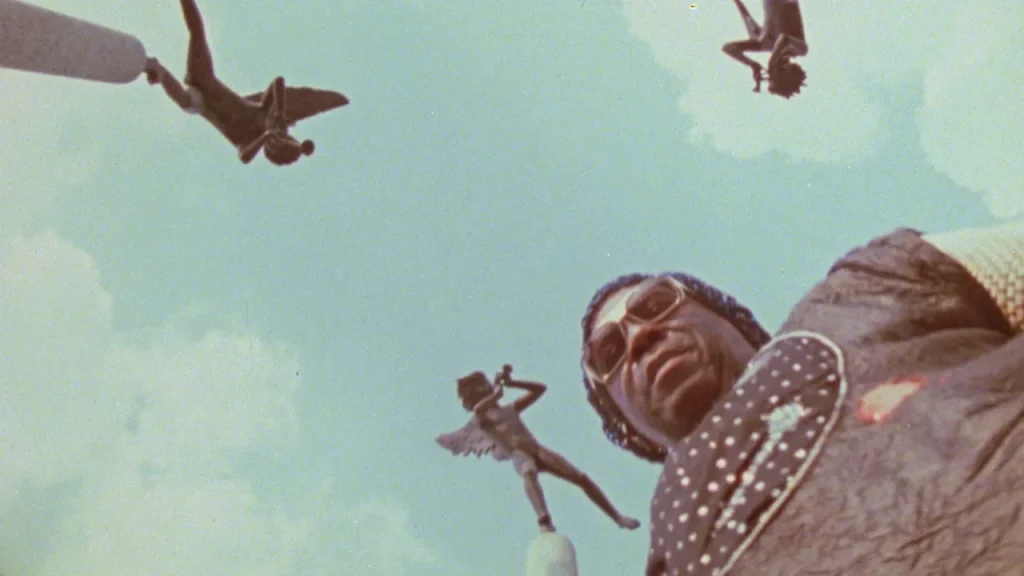
8. Liam Kenny — Sun Ra: A Joyful Noise — Robert Mugge — 1980
Sun Ra: A Joyful Noise is a document of Sun Ra and his Arkestra in the late seventies to 1980, the commune, the performances, and the glorious bombast. It is a document, and not a documentary, to distinguish a time in life and not a life in time. Sun Ra exists out of time, out of this world, the truest astronaut of the 20th century. The music is alive, and Sun Ra brings this liveliness to the people in his pronounced doctrine and on the keys. Long rehearsal and performance segments make up most of the film, and while the camera is relaxed in its portrayal of Sun Ra and his Arkestra, which serves to best show his glory, I want to primarily showcase how music can be as important to Narrow Margin as film. Rarely do the two so expressly and effortlessly work together as in this document.
‘He’s the master of it, and the personifier of all that crap you listen to… He is a king, man. Can’t you be a god and a king? The man’s 60! Been out here starving all these years. Can’t he be a god and a king? …He’s not smiling because he’s getting $50,000 a week to be a hamburger! He’s smiling because the music he writes is being played and artistically he’s being fulfilled — and he puts on a cape, and plays his electronic piano, and walks up and smiles, and lives with his musicians, and they have a commune, he’s a teacher, and a great, great artist man!’ (Jackie McLean in Jackie McLean on Mars.)

9. Joshua Peinado — Creepy (Kurīpī: Itsuwari no Rinjin) — Kiyoshi Kurosawa — 2016
The horror of Creepy, as in many Kurosawa films, is found in the presupposition that the body can be partitioned from the mind. This thesis is rejected in two sounds: a vacuum and a gunshot. If the body were merely a vessel for the ‘soul’, the crinkling of plastic around a corpse wouldn’t arouse such fear; if mind were set apart from matter, the gun would have fired in the other direction. This is the cinema of a materialist, not only in the most modern of senses, but the most ancient.
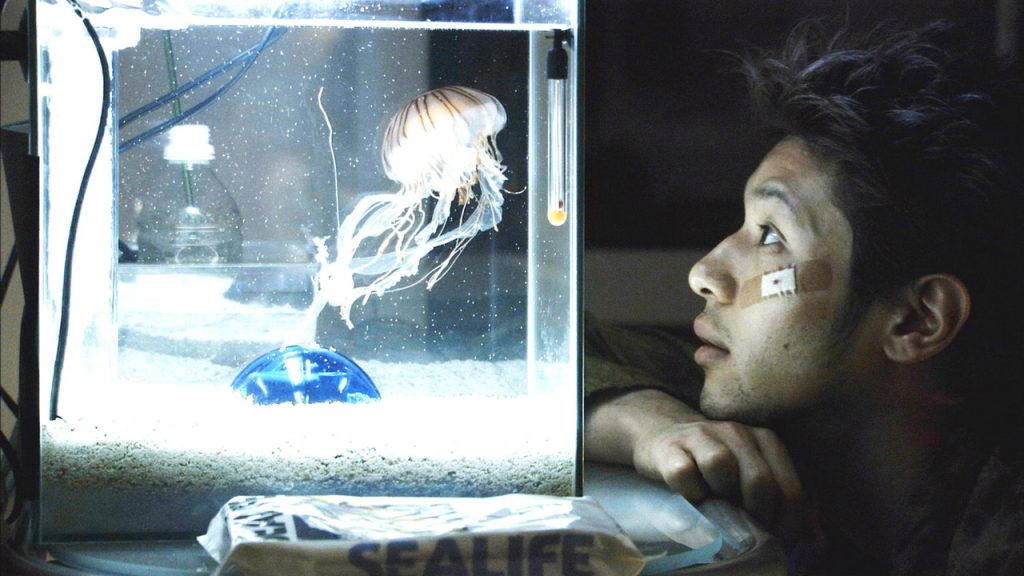
10. Hicham Awad — Bright Future (Akarui Mirai) — Kiyoshi Kurosawa — 2003
In Kurosawa, only catastrophic suggestion seems to provide relief from alienation. In Cure (1997), the amnesiac serial killer planting homicidal suggestions in his victims’ minds with a flick of a lighter is a distant disciple of Franz Mesmer, the 18th century German physician who theorized the existence of a manipulable magnetic fluid in the human body capable of producing trancelike or hypnotic effects on other people. Mesmer is perhaps the patron saint of Kurosawa’s cinema—or the false prophet it denounces. He takes the form of an ailing guest (Cure), neighbor (Creepy), and, in Bright Future, the coworker that exerts a vertiginous influence on the Nimura, film’s central character. The mesmerist, in Bright Future but also, one is tempted to say, in all Kurosawa’s fables of influence, is the friend, welcome or unwelcome, true or fake. As both debt and commemoration, Nimura is to keep his friend’s mysterious, lethal jellyfish alive. In the film’s prologue, Nimura tells us that he is most at home—most alive—in his sleep, where he dreams of a bright future. His body protests the waking hours: he lunges at people waiting in line with him for a karaage bento, he burrows into his bed, he plays dead on the floor of an arcade bar. If influence is what moves Kurosawa’s characters, melancholy is what immobilizes them. Magnetic fluid/black bile. But a jellyfish acclimating to fresh water might interrupt these cycles of collapse and agitation.
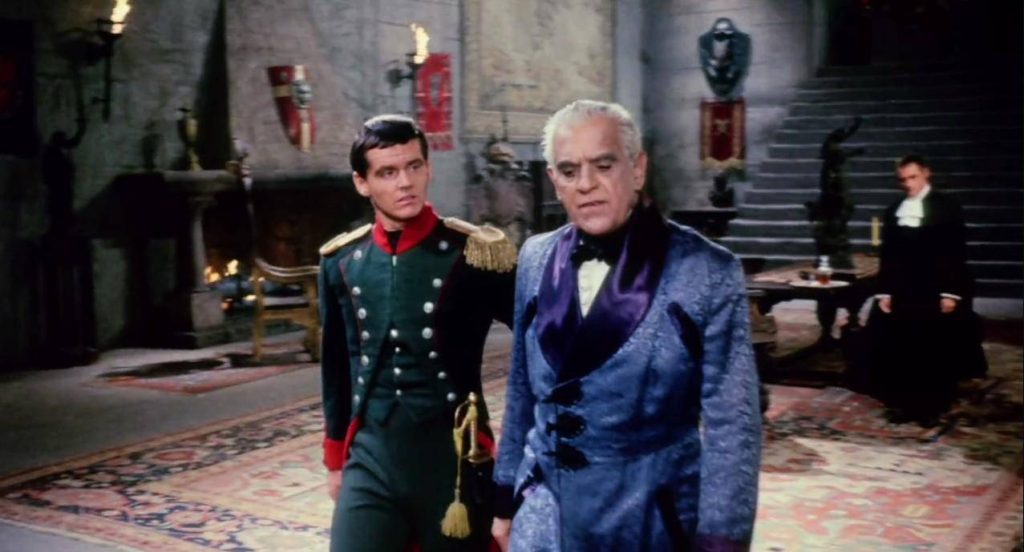
11. Jack Seibert — The Terror — Roger Corman — 1963
Aside from D.W. Griffith, nobody was more influential on cinema as we know it than Roger Corman. For one, it’s hard to imagine Godard directing Breathless without seeing the shameless shoestrings of Corman’s fifties’ movies. Corman became best known as a producer–mentor to the New Hollywood-ites, but it’s really his work as director that shows his dogged pursuit of invention, experimentation, and grace.
Take The Terror. Originally designed to be a quick shoot on leftover sets from The Raven, the gothic horror film became notorious for its belabored production across nine months, five directors, and zero plan. After each production cycle, Corman remained unhappy, and found a new director to shoot new sections. What was Corman searching for? It wasn’t beauty — Coppola’s sections try and fail at that — and it certainly wasn’t respectability. The story quickly loses its thread, and the visual preoccupations of each director are clearly at odds. But, like any great entertainer, Corman will gladly look the fool if it means getting the audience to experience something electric. And like any avant-gardist, he also manages — somehow! — to weave a pattern of repetitions, visual rhymes, and motifs that teaches you a new, private language. The film is exuberant with the same freshness one feels seeing Lumière turn on a camera for the first time. Yes, that’s what you realize when you watch The Terror: if cinema hadn’t existed, Roger Corman would’ve invented it.
12. Matt Hare — The Plains — David Easteal — 2022
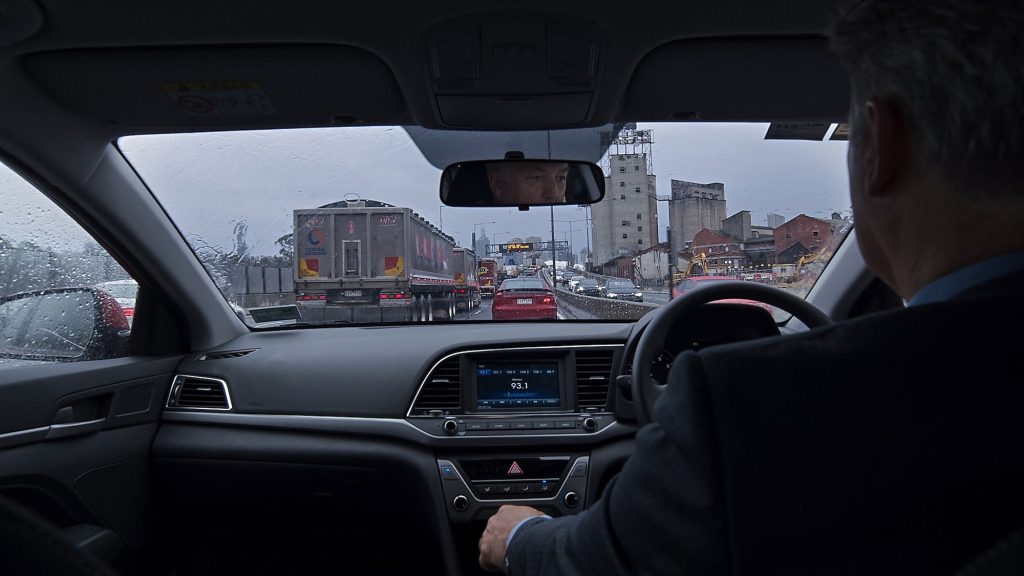
David Easteal’s The Plains gives one hope that cinema is still achievable. What it requires is to make an idea accord with some basic conditions; in this case, twelve shooting days over twelve months, a three-person crew and a rented camera, the director David re-enacting commute conversations with his old co-worker Andrew from four years prior. The same shot, from the same viewpoint, repeated across the seasons.
At first, The Plains recalls the famed ‘young man driving through Rome’ sequence in Straub–Huillet’s History Lessons; then, because this is a real film, something else happens. The History Lessons shot divides the frame so that contemporary political life happens in the bottom part of the screen whereas history, sedimented in architecture, is above, marked off within the aperture of the sunroof. The Plains appears as in tension with this setup: the closed roof of the car, intercut with the lurching drone shots taken out on the titular plains, seems designed to address the wrong life of the middle-class commuter; what is closed off is the sky and the land, and thus a relation to natural history. Yet the intention here is not didactic, The Plains is not a chastising film, but an act of empathy and friendship; if it begins from wrong life it is in order to traverse stepwise towards an image of life lived as best as one can. The closed space of the car, and protagonist Andrew’s conversations with his mother (played, startlingly, by his wife), is a medium for reflection on the death of one’s parents and, as Easteal has emphasized, paraphrasing a passage from Seamus Heaney, the exposure that entails, the feeling of ‘the parental roof being taken away from the barn, and suddenly the sky/infinity’. Once it’s clear that this is what is being worked through, it reframes much of the earlier repetition, as well as the narrowness of the frame. It is not incidental here that the position occupied by the viewer is precisely that of a child listening to their parents chat in the front, a shared memory which adds substantially to the film’s sensory and emotional charge. Easteal’s achievement is to have come up with a constraint that allowed him to make a film where he was, and then to have followed it through in a manner which transcends all dispositivism. The greatest praise for a project such as this is that one stops watching this constraint at work, counting the drives (are we at seven or eight?), and starts looking out the window.
Leave a Reply